archived newsletters

Issue #1: Apr. 2007    Go >
Issue #2: Jan. 2008   Go >
Issue #3: Feb. 2008   Go >
Issue #4: Apr. 2008    Go >
Issue #5: May 2008    Go >
Issue #6: Dec. 2008   Go >
Issue #7: Feb. 2009   Go >
Issue #8: May 2009    Go >
Issue #9: Jun. 2009   Go >
Issue #10: Sep 2009  Go >
Issue #11: Jan 2010  Go >
Issue #12: May 2010  Go >
Issue #13: Sep.2010  Go >
Issue #14: Dec. 2010 Go >
Issue #15: Jan. 2011 Go >
Issue #16: Mar. 2011 Go >

Newsletters

Issue: #17: June 2011

Namaste friends,

There's an axiom in Chinese medicine that eating the wrong food with the right attitude is better than eating the right food with the wrong attitude. While there's no question that eating healthily is good for you, there is a danger in carrying this to an extreme. It's easy to become rigid and uncompromising around food, afraid to eat out or to enjoy dessert.

For a balanced approach, try the 80/20 rule: stick to your healthy regimen 80 percent of the time, but be willing to let loose for the other 20 percent. Without compromise, you risk developing an attitude of deprivation that will harden you inside and make mealtimes miserable. Think of everything that happens when you deny yourself sustenance, whether that is food, sleep or emotional support. Your body becomes stressed and stress is unhealthier than anything you could ever put in your mouth.

Here are a few guidelines and questions to ask yourself when you sit down to the table:

  • Get in touch with the sensation of being hungry. Where in your body do you feel the need for food? Is it in your gut? Your tongue? Your eyes? Your brain?

  • Close your eyes before you dig in. Look for another craving other than food. Is there something else? Are you affected by any disappointment? Are you angry? Are you craving closeness? Do you need a change? Acknowledge your needs, whatever they are, and take a deep breath. Open your eyes and look at the food. Has the desire for food become less desperate?

  • Look at how you actually eat. Do you immediately attack your food aggressively and chew it voraciously when you put it in your mouth? Can you taste it without crushing and chewing it? Try postponing swallowing for as long as you can so you really taste the food. If you rush, you deprive yourself of the sense of taste. The more you establish the quality of pleasure, the less food you need.

  • Sense your resistance to taking your time. Eating is often compulsive rather than a choice. To help yourself slow down, try eating with your non-habitual hand. If you smell your food before shoveling it in, you'll find yourself able to slow down.

  • Pay attention to how you hold your body as you eat. Are you tense? Are you breathing? Notice if your belly is contracted.

  • Before you take a second helping, close your eyes and count slowly from one to ten. Pause and ask yourself if you are content as you are or do you need more?

    Breathe well; be well
    Suzanne
    Full Potential Yoga
    suzanneausnit@optonline.net

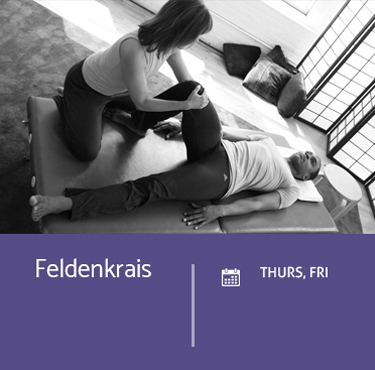
    P.S. For a totally new way to free up your neck, shoulders and ribs, inspired by my Feldenkrais training, check out the "Rescue Your Ribs & Shoulders" workshop on June 7.

Soul Food

"Preserving the health by too strict a regimen is a wearisome malady."
--François Duc de la Rochefoucauld

"Believe those who are seeking the truth. Doubt those who find it." --Andre Gide


HEAL

Organic Buy Rights
Everyone knows that we need to minimize consumption of pesticides. One big challenge is the cost, as organic produce is more expensive. The Environmental Working Group has stepped in to help promote wise spending by releasing a listing of the fruits and veggies that contain the most pesticide residue, as well as those that contain the least. The report is based on 89,000 tests of produce by the USDA and FDA over an eight-year period. The top organic choices are: celery, peaches, strawberries, apples, blueberries, nectarines, bell peppers, spinach, cherries, kale/collard, greens, potatoes and imported grapes. Foods where you can more safely save your money and perhaps skip organic produce include: onions, avocado, sweet corn, pineapple, mangos, sweet peas, asparagus, kiwi, cabbage, eggplant, cantaloupe, watermelon, grapefruit, sweet potato, honeydew and melons. For more information: www.foodnews.org.

Vegalicious
If it's difficult to get all your veggies in, try this tasty green smoothie recipe. Mix a cup to two cups of kefir with a bunch of organic parsley, half an avocado, a bunch of raw kale, half a banana, a handful each of frozen mango and almonds. Blend until smooth. If you're wondering "why parsley," it's because this often overlooked herb is particularly rich in antioxidants that protect against cancers, as well as vitamins like K, which helps maintain healthy bones. Parsley also contains the essential oil eugenol, an antiseptic for teeth and gums. Plus, it makes for a refreshing and delicious smoothie (if you can get past the green color).


STRENGTHEN

Step-it-up
To wake up sleepy outer hip muscles (the abductor muscles) in preparation for balancing poses, try this variation on the classic sidelying leg lift. Lying on your right side, lift your left leg slightly (6 inches is plenty). Press the entire outer right leg down into the floor and you'll notice the left leg lifts and lowers in response. To make the action even easier, let your eyes look up as you ground the bottom leg. This little action of the eyes will help recruit the entire body in the movement, in effect sliding the body up and down. Then try tree standing on the right leg. Not only will it be easier, but the muscles that need to fire to keep you balanced will be engaged on their own.

Muscle Maintenance
As we age, we tend to lose muscle, a condition called sarcopenia. Muscle loss can make activities we take for granted, such as lifting groceries or reaching for something on a high shelf, difficult for many elderly people. In addition, muscle serves as a protein reserve, which the immune system can call upon to fight off disease. Frail senior citizens who lack those reserves are more susceptible to illness. Fortunately, the process can be slowed or even reversed by exercising to maintain your strength, as well as making sure you get enough protein in your diet. In yoga, holding poses forces your muscles to engage in isometric contractions. Think of the strength it takes in your thighs and shoulders to hold warrior II, or the engagement of your core and arms in plank position.


LIVE

Sweet Nothings
It's no surprise that sugar isn't particularly good for you. But a recent New York Times Magazine article took these concerns further by concluding that available research shows that sugar is actually toxic. The connections between excess sugar consumption and diabetes, fatty liver and heart disease are not particularly surprising. What's more surprising is that sugar may increase your risk of tumors, including breast and colon cancer, due to increased insulin levels. The good news is that those effects seem to be reversible if you change your diet. Unfortunately, the jury is still out on how much sugar is too much.

Forked Over
If you eat too quickly, you tend to eat too much because you're not aware of signals that you're full. An easy way to slow yourself down and train your awareness is to consciously put your fork down after taking a bite. You'll be surprised to find how often your fork is poised in midair for the next bite while you're still chewing. To slow yourself further, notice where you chew--is it on the right side or the left? To reduce jaw tension, consciously vary which side of the mouth you use. These simple tips can help you stop inhaling your food and overindulging.


WORKSHOPS

Free Your Body Series:
BREATHING 101

Better breathing helps:

  • Improve your posture
  • Strengthen your core
  • Connect to your pelvic floor to help with digestion, elimination and sexual function
  • Ease chronic sciatica and back pain
  • Relax and balance your emotions
  • Increase energy and vitality

Life starts with a first instinctive breath. However, "life" can just as quickly disrupt our natural breathing patterns, impacting the way we feel and act. Through a combination of breath awareness exercises, Feldenkrais lessons and active yoga postures, you will learn to breathe more effectively. Once you change your breath, you can change everything-from how you physically feel to how you perceive and experience the world.

WHEN: Saturday, September 17, 11:30 am to 2:30
WHERE: Monroe Center, 720 Monroe St. (free parking), Room 517, Hoboken 
COST: $70 by 9/1, $80 after

PRE-REGISTRATION REQUIRED. Contact me at suzanneausnit@optonline.net
Tel. 973-204-0929.


Photo Credit: Bruce R. Jaffe

"We join spokes together in a wheel, but it is the center hole that makes the wagon move. We shape clay into a pot, but it is the emptiness inside that holds whatever we want. We hammer wood for a house, but it is the inner space that makes it livable. We work with being, but non-being is what we use."
Lao-tzu

"Insist on yourself; never imitate. Your own gift you can present every moment with the cumulative force of a whole life's cultivation."
Ralph Waldo Emerson

"Let your awareness sink into your breath and find the bottom of your breath. Allow the breath to come and go as it may...As you get to the end of the out breath, let go in the same sort of feeling that you have when you let your body drop into a very comfortable bed--let it drop and fall. Let the weight of the air do it. Don't push, drop. Then after awhile the breath will return. But don't pull it in, let it fall back in. The breath will drop in until you've had enough; then let it drop out again."
Alan Watts

"The real voyage of discovery consists not in seeking new landscapes but in having new eyes."
Marcel Proust

"The mind's first step to self-awareness must be through the body."
George Sheehan

"Our own physical body possesses a wisdom which we who inhabit the body lack."
Henry Miller

"There is an essential difference between consciousness and awareness. I can walk up the stairs of my house, fully conscious of what I am doing, and yet not know how many steps I have climbed.  In order to know how many there are I must climb them a second time, pay attention, listen to myself, and count them.  Awareness is consciousness together with a realization of what is happening within it or of what is going on within ourselves while we are conscious."
Moshe Feldenkrais

"If you do a practice and train your attention to hover in the present, then you will build the internal capacity to do that as needed -- at will and voluntarily."
Daniel Goleman

"The art of losing isn't hard to master;
so many things seem filled with the intent to be lost that their loss is no disaster...

"Then practice losing farther, losing faster: places, and names, and where it was you meant to travel. None of these will bring disaster."
Elizabeth Bishop

"And then I thought of my father's asking me to cut the grass behind the cabin a week ago....I fetched the scythe from the shed and set about it with all my strength...But alongside the cabin wall there was big patch of stinging nettles, growing tall and thick, and I worked my way around them in a wide arc.
"Why not cut down the nettles? he (my father)said...
"It will hurt," I said.  Then he looked at me with half a smile and a little shake of the head.
"You decide for yourself when it will hurt," he said.  He walked over to the nettles and took hold of the smarting plants with his bare hands and began to pull them up with perfect calm...and he did not stop before he had pulled them all up."
Per Petterson
from Out Stealing Horses

"He who can no longer pause to wonder and stand rapt in awe, is as good as dead; his eyes are closed."
Albert Einstein

"The world will never starve for want of wonders, but for want of wonder."
G. K. Chesterton


©2011 Full Potential Yoga. All Rights Reserved.